
TWS Earbuds Manual: A Comprehensive Guide (Updated 04/22/2026)
JBL Tune Beam 2 TWS exemplifies affordable earbuds often requiring compromises; ANC, audio quality, battery life, or durability can be affected, sometimes failing quickly.
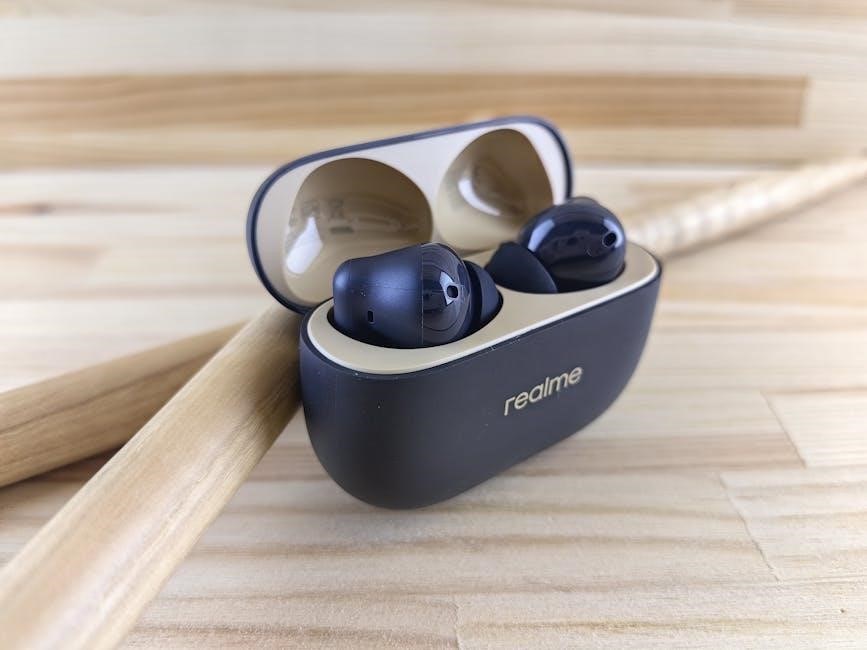
Welcome to the world of True Wireless Stereo (TWS) earbuds! This guide provides a comprehensive overview, helping you maximize your listening experience. TWS earbuds have revolutionized personal audio, offering unparalleled freedom and convenience. Unlike traditional headphones, they eliminate cables entirely, connecting wirelessly to your devices via Bluetooth.
The JBL Tune Beam 2 TWS, like many modern earbuds, demonstrates this shift. However, affordability often means trade-offs. Understanding these potential compromises – in Active Noise Cancellation (ANC) performance, audio fidelity, battery longevity, or even product durability – is crucial. This manual will equip you with the knowledge to navigate these aspects.
We’ll cover everything from initial setup and daily usage to maintenance and troubleshooting. Whether you’re a first-time user or an experienced audiophile, this guide will ensure you get the most out of your TWS earbuds, addressing potential issues like early failures.
What are True Wireless Stereo (TWS) Earbuds?
True Wireless Stereo (TWS) earbuds represent a significant leap in headphone technology. They are completely cable-free, meaning no wires connect the earbuds to each other or to your audio source – typically a smartphone, tablet, or computer. Each earbud functions as an independent audio unit, transmitting sound via Bluetooth.
The core principle behind TWS is delivering stereo sound wirelessly. Each earbud receives a separate audio channel (left and right), creating a spacious and immersive listening experience. Models like the JBL Tune Beam 2 TWS exemplify this, though affordability can impact the quality of this stereo separation.
Unlike traditional wireless headphones with a connecting band, TWS earbuds offer ultimate portability and freedom of movement. They rely on a charging case for power and often feature touch controls for managing music and calls. Understanding these features is key to enjoying the full potential of TWS technology.
Key Features of Modern TWS Earbuds
Modern TWS earbuds boast a range of advanced features beyond basic wireless connectivity. Active Noise Cancellation (ANC) is prevalent, aiming to block out external sounds for immersive listening – though, as seen with the JBL Tune Beam 2 TWS, effectiveness varies with price.
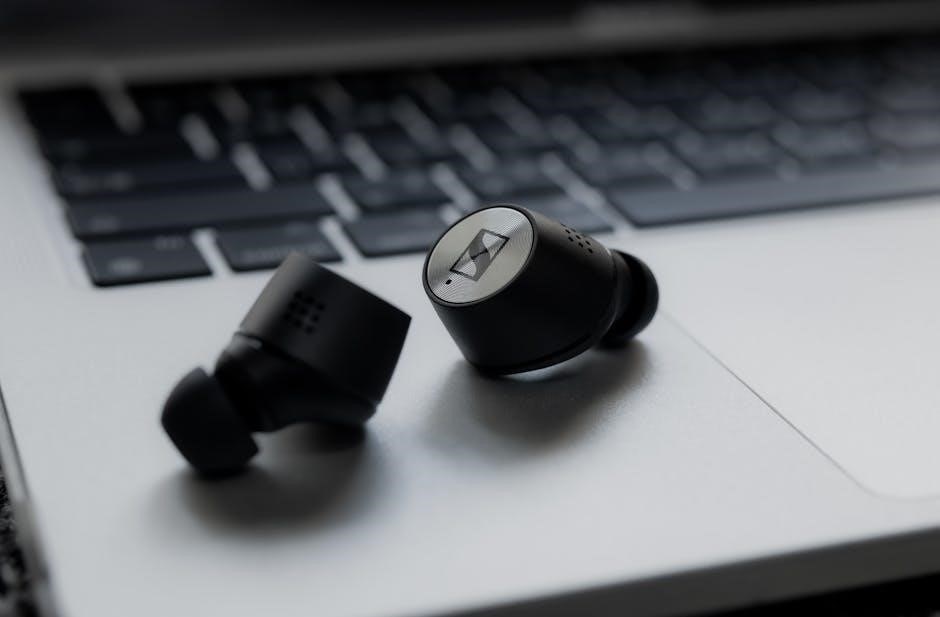
Transparency Mode offers the opposite, allowing ambient sound to pass through, enhancing situational awareness. Improved battery life, often exceeding 20 hours with the charging case, is standard. Many models now include customizable EQ settings via companion apps, tailoring sound to individual preferences.
Water resistance (indicated by IP ratings) is increasingly common, protecting against sweat and light rain. Touch controls enable easy music management and call handling. Voice assistant integration (Siri, Google Assistant) provides hands-free control. Ultimately, these features combine to deliver a versatile and convenient audio experience.
Setting Up Your TWS Earbuds
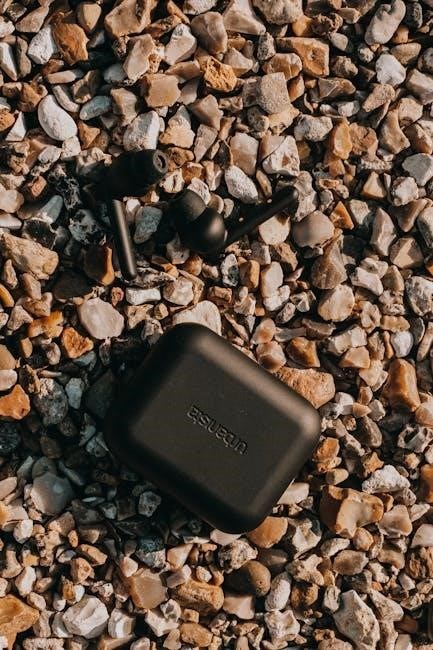
Before enjoying your new earbuds, carefully unpack all components and verify their presence. Prepare for seamless pairing with both iOS and Android devices, initiating your audio journey.
Unboxing and Component Check
Carefully open the packaging and ensure all listed components are present. Typically, your TWS earbuds package should include the following: the left and right earbuds themselves, the charging case (which also often serves as a portable power bank), a USB-C charging cable (or potentially a Lightning cable for Apple devices), and a selection of ear tips in varying sizes – small, medium, and large – to guarantee a secure and comfortable fit for diverse ear canals.
Additionally, you may find a quick start guide or a more comprehensive user manual detailing the earbuds’ features and functionalities. Inspect each component for any visible damage that may have occurred during shipping. If anything is missing or appears damaged, immediately contact the retailer or manufacturer for assistance. Proper component verification ensures a hassle-free initial setup and optimal performance from your new TWS earbuds.
Pairing with Your Device (iOS & Android)
To pair your TWS earbuds, first, ensure they are fully charged and within close proximity to your smartphone or tablet. For iOS devices, open the Settings app, navigate to Bluetooth, and ensure Bluetooth is toggled on. With the earbuds inside the charging case, open the lid. Your earbuds should appear in the list of available devices; select them to connect. Android pairing is similar: go to Settings, then Connections (or Bluetooth, depending on your device), enable Bluetooth, and scan for available devices.
Select your earbuds from the list. You may be prompted for a pairing code (usually ‘0000’ if required). Once connected, your device will remember the earbuds for future use. Some earbuds feature a dedicated pairing button on the charging case for initiating the pairing process. Refer to your user manual for specific instructions tailored to your model.
Understanding the Earbud Controls
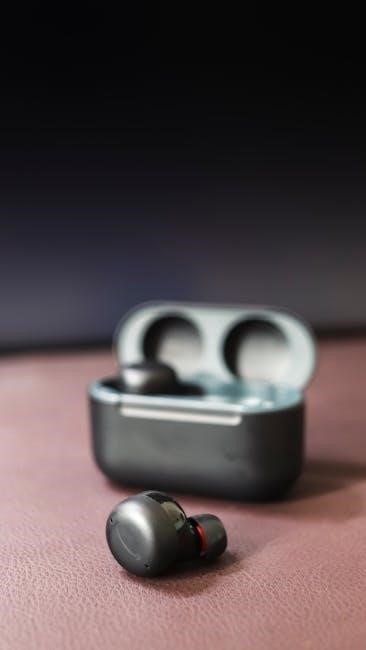
Most TWS earbuds utilize touch controls, though some models may incorporate physical buttons. Common gestures include single taps for play/pause, double taps to skip tracks forward, and triple taps to return to the previous track. Volume control is often achieved through a long press on either the left or right earbud. Understanding these controls enhances your listening experience.
Many earbuds also support voice assistant activation with a specific gesture, like a long press. Refer to your earbud’s manual for a detailed diagram illustrating the control scheme. Customization options are increasingly available through companion apps, allowing you to remap controls to your preferences. Familiarizing yourself with these controls will allow seamless operation without needing to reach for your connected device.
Using Your TWS Earbuds
JBL Tune Beam 2 TWS delivers a convenient listening experience, but compromises in ANC, audio, battery, or durability are common with budget-friendly options.
Basic Operations: Play, Pause, Skip, Volume
Mastering the fundamental controls of your TWS earbuds unlocks a seamless audio experience. Typically, a single press on either earbud pauses or plays your current track. Double-pressing often skips to the next song, while a triple-press usually reverts to the previous one.
Volume control varies between models; some utilize tap gestures – a swipe up or down on the earbud surface – while others employ specific multi-press combinations. Refer to your earbud’s specific manual for precise instructions.
JBL Tune Beam 2 TWS, like many, prioritizes simplicity. However, remember that affordable earbuds sometimes necessitate accepting compromises in responsiveness or feature richness. Consistent practice will quickly familiarize you with the control scheme, allowing for effortless music management on the go. Experiment to discover the quickest and most intuitive methods for your listening preferences.
Answering and Making Calls
Your TWS earbuds aren’t just for music; they’re convenient for hands-free calling. Typically, a single press on one earbud answers an incoming call, while a double-press might reject it. During a call, volume adjustment usually mirrors music controls – tap gestures or specific press combinations.
To initiate a call, you’ll generally need to activate your device’s voice assistant (see section on Voice Assistants) and dictate “Call [contact name]”. Call quality depends on the earbud’s microphone quality and surrounding noise levels.
Considering the JBL Tune Beam 2 TWS’s affordability, call clarity might be a compromise. Ensure a stable Bluetooth connection for optimal performance. Some models support call waiting, allowing you to switch between calls with a designated press sequence. Familiarize yourself with your earbud’s specific call control scheme for a smooth experience.
Activating Voice Assistants (Siri, Google Assistant)
Most TWS earbuds offer seamless integration with voice assistants like Siri and Google Assistant, enhancing hands-free control. Activation typically involves a long press on one of the earbuds – the specific earbud and duration vary by model. Once activated, a chime or voice prompt confirms the connection.
You can then issue commands such as making calls, playing music, setting reminders, or asking questions. The responsiveness relies on a stable Bluetooth connection and internet access for certain queries.
Considering the JBL Tune Beam 2 TWS, while functional, voice assistant performance might not be as refined as premium options. Ensure the microphone isn’t obstructed for clear command transmission. Check your device settings to confirm the preferred voice assistant is selected for optimal compatibility and functionality.
Maintaining Your TWS Earbuds
JBL Tune Beam 2 TWS, like all earbuds, benefits from regular cleaning and proper charging practices to ensure longevity and consistent performance over time.
Cleaning and Care Instructions
Maintaining the cleanliness of your TWS earbuds is crucial for both hygiene and optimal performance. Regularly wipe down the earbuds with a soft, dry, lint-free cloth to remove earwax and debris. For stubborn grime, slightly dampen the cloth with isopropyl alcohol – ensure no liquid enters the earbud openings.
The charging case also requires periodic cleaning. Use a dry cotton swab to gently remove any dust or debris from the charging contacts. Avoid using abrasive cleaners or excessive moisture, as these can damage the delicate electronics.
Store your earbuds in their charging case when not in use to protect them from dust, moisture, and potential damage. Avoid exposing the earbuds to extreme temperatures or direct sunlight for extended periods. Proper care, like that needed for JBL Tune Beam 2 TWS, will significantly extend the lifespan of your investment and ensure a consistently enjoyable listening experience.
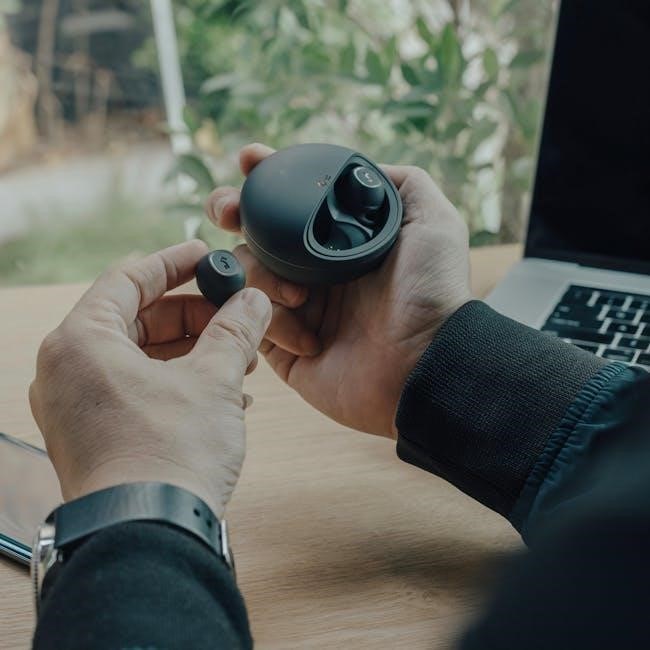
Charging the Earbuds and Charging Case
To charge your TWS earbuds, place them securely into the charging case. The case will begin charging the earbuds automatically, indicated by a light signal – consult your specific model’s documentation for light code meanings; Ensure the earbuds are properly seated within the case for efficient charging.
The charging case itself is typically charged via USB-C, though some models may use Micro-USB or wireless charging. Connect the appropriate cable to the case and a power source. A light indicator will show the charging status of the case.
Like the JBL Tune Beam 2 TWS, avoid overcharging the earbuds or the case, as this can degrade battery health over time. Disconnect the case from the power source once fully charged. Regularly check the charge level of both the earbuds and the case to ensure you always have power when needed.
Battery Life and Optimization Tips
Typical TWS earbud battery life ranges from 4 to 8 hours on a single charge, with the charging case providing several additional charges. However, features like Active Noise Cancellation (ANC) and high volume levels can significantly reduce playtime. As seen with models like the JBL Tune Beam 2 TWS, compromises are sometimes made with battery life for affordability.
To optimize battery life, consider disabling ANC when not needed, and reducing the volume. Avoid extreme temperatures, as heat and cold can negatively impact battery performance.
Store your earbuds in the charging case when not in use to conserve power. Regularly check the battery status via your connected device’s Bluetooth settings. Fully discharging the battery occasionally, followed by a full recharge, can help maintain long-term battery health.
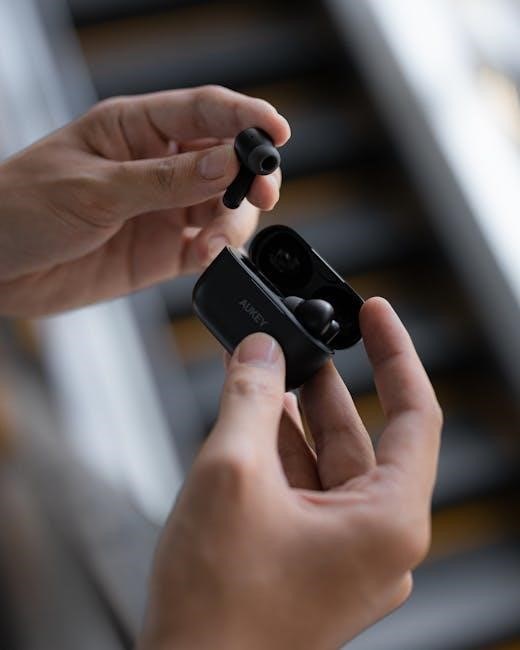
Troubleshooting Common Issues
JBL Tune Beam 2 TWS users sometimes encounter issues like patchy ANC, flat audio, or early failure of one earbud, requiring careful examination and potential solutions.
Earbud Won’t Connect
If your TWS earbuds refuse to connect, several troubleshooting steps can resolve the issue. First, ensure Bluetooth is enabled on your device and that the earbuds are sufficiently charged – a low battery can hinder pairing; Attempt to ‘forget’ the earbuds from your device’s Bluetooth settings and then re-pair them, initiating a fresh connection sequence.
Confirm the earbuds are in pairing mode; this usually involves holding a button on the charging case or the earbuds themselves until an indicator light flashes. Check for interference from other Bluetooth devices or wireless signals, which can disrupt the connection. Restarting both your device and the earbuds can often clear temporary glitches.
For JBL Tune Beam 2 TWS, or similar models, a complete reset of the earbuds to factory settings might be necessary, as detailed in the product manual. If problems persist, consult the manufacturer’s support resources or website for specific guidance related to your earbud model.
Sound Quality Problems
Experiencing subpar sound from your TWS earbuds can be frustrating. Initially, verify the volume levels on both your device and the earbuds themselves are appropriately adjusted. Ensure the correct audio output is selected on your device – sometimes it defaults to an external speaker. Try different music sources or streaming services to rule out issues with the audio file itself.
Clean the earbud speakers gently with a soft, dry cloth to remove any wax or debris that might be obstructing the sound. If using an equalizer on your device, experiment with different settings to optimize the audio profile. For models like the JBL Tune Beam 2 TWS, where affordability sometimes impacts audio fidelity, consider that limitations may exist.
Check for firmware updates for your earbuds, as these often include sound quality improvements. If the problem persists, test the earbuds with another device to isolate whether the issue lies with the earbuds or your primary source.
Charging Issues and Solutions
If your TWS earbuds aren’t charging, first inspect the charging port on both the earbuds and the charging case for any debris or obstructions. Use a soft, dry brush to carefully clean them. Ensure the charging cable and adapter are functioning correctly by testing them with another device. Try a different USB port or wall adapter.
Confirm the charging contacts within the case are clean and making proper contact with the earbuds. For earbuds like the JBL Tune Beam 2 TWS, where battery life can be a concern, consistent charging is crucial. Allow ample charging time – sometimes a full charge takes several hours.
If the case isn’t charging, verify the power source is working. If issues persist, consult the manufacturer’s website for specific troubleshooting steps or warranty information. Avoid using damaged charging cables, as they can pose a safety hazard.
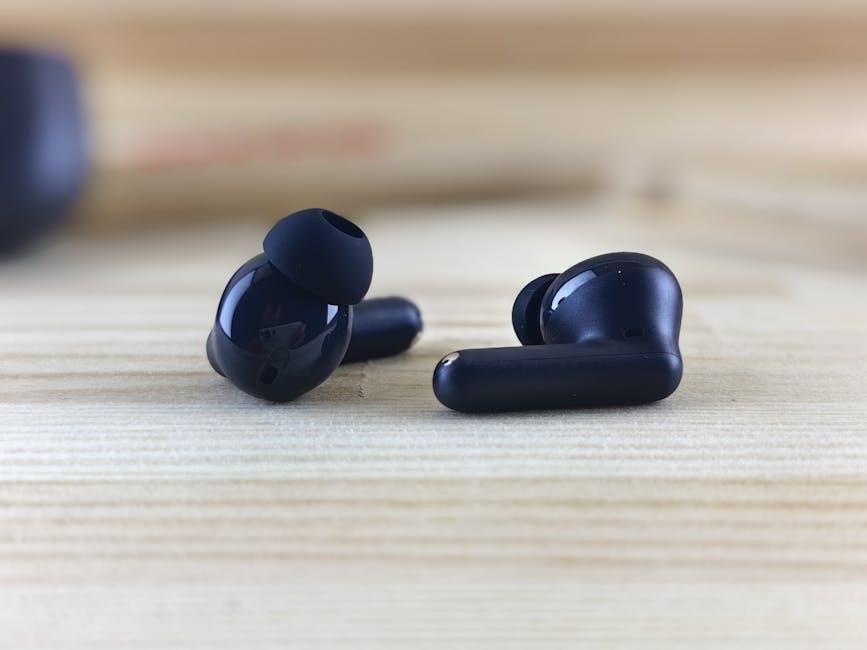
Advanced Features & Considerations
JBL Tune Beam 2 TWS highlights that ANC, transparency modes, and water resistance (IP ratings) are key advanced features impacting user experience and device suitability.
Active Noise Cancellation (ANC) Explained
Active Noise Cancellation (ANC) is a crucial feature in many modern TWS earbuds, designed to minimize external distractions for a more immersive listening experience. Unlike passive noise isolation – achieved through earbud fit and materials – ANC actively works to counteract ambient sounds.
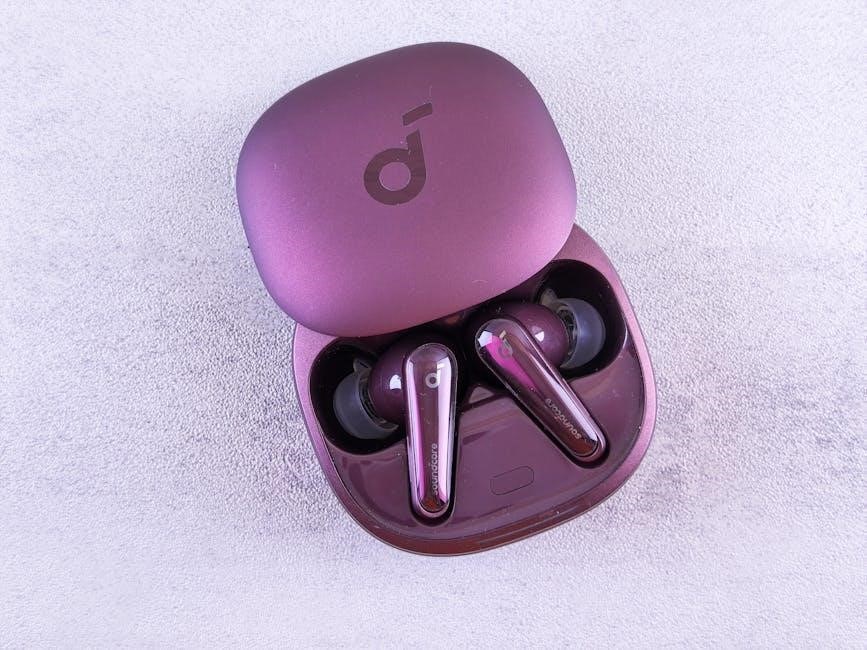
This is accomplished by utilizing tiny microphones built into the earbuds. These microphones detect external noise, and the earbuds’ internal processor generates an “anti-noise” signal – a sound wave that is the exact opposite of the detected noise. When these two waves combine, they effectively cancel each other out, reducing the perceived volume of the surrounding environment.
However, as noted with models like the JBL Tune Beam 2 TWS, the effectiveness of ANC can vary significantly. More affordable earbuds often feature “patchy” ANC, meaning it struggles with certain frequencies or louder noises. Premium earbuds generally offer more sophisticated ANC algorithms and better microphone performance, resulting in superior noise reduction across a wider spectrum of sounds. Understanding these limitations is key when choosing earbuds with ANC.
Transparency Mode: Staying Aware of Your Surroundings
Transparency Mode, also known as “hear-through” mode, is a valuable feature in TWS earbuds that allows you to remain aware of your surroundings while still enjoying your audio. Unlike ANC which blocks external sounds, Transparency Mode actively lets them in.
This is achieved by utilizing the same microphones used for ANC, but instead of creating an anti-noise signal, the earbuds amplify external sounds and feed them directly into your ears. This creates a more natural listening experience, allowing you to hear conversations, traffic, or important announcements without removing your earbuds.
Transparency Mode is particularly useful in situations where situational awareness is crucial, such as walking or cycling in urban environments. While the JBL Tune Beam 2 TWS review doesn’t specifically mention this feature, it’s becoming increasingly common in modern earbuds. The quality of Transparency Mode varies; better implementations sound natural and clear, while others can sound artificial or amplified.
Water Resistance and Sweatproofing (IP Ratings)
Water resistance and sweatproofing are crucial considerations for TWS earbuds, especially for active lifestyles. These features are quantified by an IP (Ingress Protection) rating – a two-digit code indicating protection against solids and liquids.
The first digit represents solid particle protection (dust), while the second indicates liquid ingress protection. A rating of IPX4, common in many earbuds, signifies splash resistance – able to withstand sweat or light rain. Higher ratings, like IPX7, denote immersion resistance up to 1 meter for 30 minutes.
While the JBL Tune Beam 2 TWS review doesn’t detail its specific IP rating, understanding these ratings is vital. Note that water resistance isn’t permanent and can diminish over time. Avoid exposing your earbuds to high-pressure water jets or prolonged submersion, even with a high IP rating. Proper care extends the lifespan of water-resistant features.